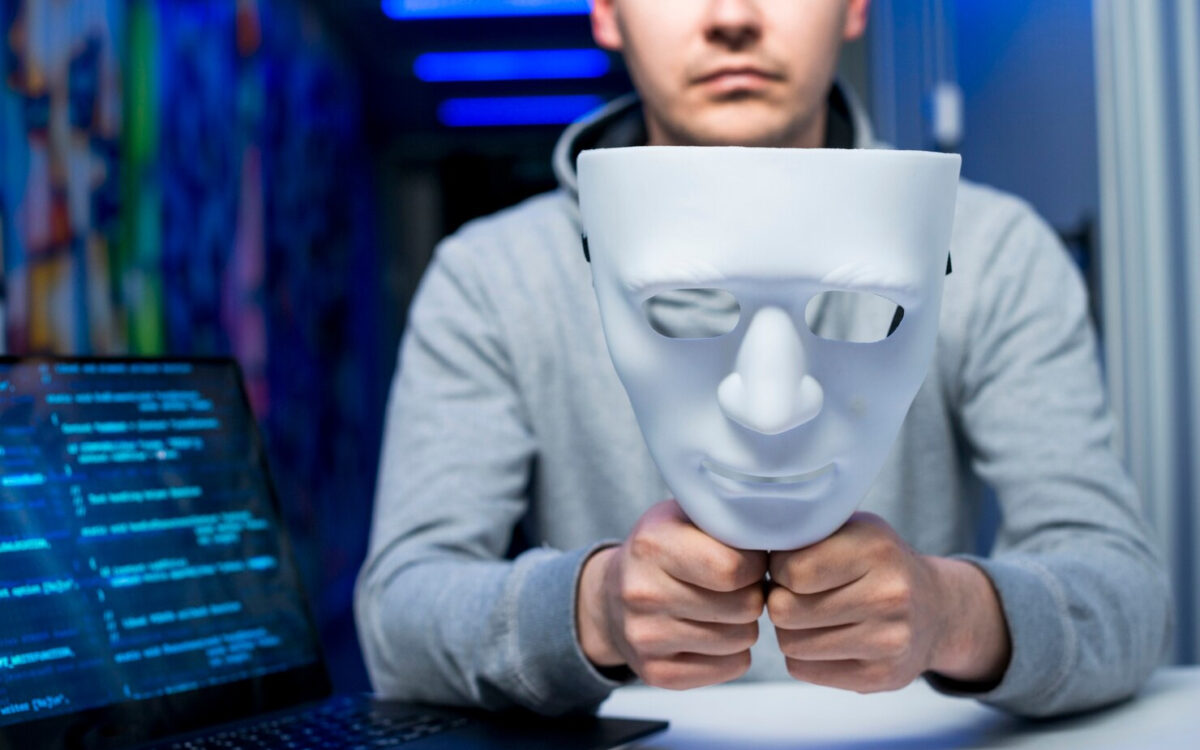
Deepfake technology has evolved from harmless entertainment to one of the most dangerous cybersecurity challenges facing organizations today. Powered by advanced AI and machine learning, deepfakes allow attackers to replicate human voices, faces, and behaviors with alarming accuracy. This means cybercriminals no longer need to hack systems—they can hack human trust. With businesses increasingly relying on video conferencing, digital communication, and remote collaboration, deepfake cyber threats have never been easier to execute or harder to detect.
As we move into 2025, cybersecurity experts warn that deepfake-enabled crimes will escalate dramatically. From impersonating CEOs to bypass verification systems, these attacks can cause financial loss, data breaches, and severe reputational damage. What makes deepfakes more concerning is their scalability. Once criminals create a fake voice or video model, they can automate attacks at massive scale, making traditional security measures ineffective. Organizations must now recognize deepfakes as a critical risk vector—not a future possibility, but a present-day threat.
How Deepfakes Work: Understanding the Technology Behind the Threat
Deepfakes rely on a class of AI models called Generative Adversarial Networks (GANs), which learn to create hyper-realistic audio and video content by analyzing vast amounts of real-world data. Over time, these models become highly accurate, enabling attackers to clone voices, mimic facial expressions, and even reconstruct body movements. As cloud-based AI tools become more accessible and powerful, threat actors no longer need advanced technical skills to generate convincing deepfake media. This democratization of deepfake creation is one of the biggest contributors to rising cyber risks.
The growth of synthetic media tools means attackers can create targeted, personalized deepfakes for social engineering. For example, deepfake voice phishing attempts—also called “vishing”—can trick employees into transferring money or sharing sensitive information. In some cases, attackers use compromised online videos or audio recordings from social media to build fake identities. As deepfake quality continues improving, even trained professionals struggle to differentiate real content from manipulated media, making detection a complex challenge.
Why Deepfake Cyber Threats Are Exploding in 2025
The rise of deepfake cyber threats in 2025 is driven by an intersection of technological advancements and behavioral trends. AI models have become exponentially more powerful, capable of generating real-time voice replication and video manipulation. Additionally, the shift toward remote and hybrid work has significantly increased digital communication, creating more attack surfaces. A fraudulent voice call or video meeting can now easily bypass security protocols because employees rarely question the legitimacy of messages coming from familiar faces or voices.
Another major driver is economics. Deepfake attacks are extremely low-cost for cybercriminals but high-cost for victims. A single deepfake scam can lead to millions of dollars in financial losses. In fact, several documented deepfake CEO fraud incidents have already resulted in multi-million-dollar transfers. As cybercriminal groups start integrating deepfake automation into phishing kits and ransomware campaigns, businesses will face more frequent and more sophisticated attacks. This shift marks deepfakes as a long-term cybersecurity threat that organizations must actively prepare for.
Common Types of Deepfake Cyber Attacks
Deepfake technology is enabling a variety of new cyber attack methods that directly target people, processes, and systems. Some of the most concerning include:
Popular Deepfake Attack Techniques:
- Deepfake Voice Phishing (Vishing): Fake audio used to impersonate executives and request urgent actions.
- Video Conferencing Hijacks: Real-time video manipulation to impersonate colleagues during meetings.
- Credential Harvesting: Deepfake videos used to mimic identity for authentication bypass.
- Disinformation Campaigns: False media created to manipulate public opinion or influence decision-making.
- Ransom & Extortion Schemes: Synthetic compromising videos used to blackmail individuals or organizations.
Each of these attack types presents unique risks. For example, deepfake vishing attacks are often used in business email compromise (BEC) cases, making it easier for criminals to deceive employees. Similarly, deepfake video hijacking threatens the integrity of digital meetings, particularly in sensitive industries like finance or law. As attackers continue to innovate, organizations must stay ahead with updated policies and detection tools.
Impact of Deepfake Attacks on Businesses
When deepfake attacks succeed, the damage extends far beyond financial loss. They undermine trust—the foundation of business communication. Employees may become hesitant to respond to messages or instructions, slowing down operations. Fake media can also distort brand reputation if it circulates online, affecting customer perception and investor confidence. For industries dealing with sensitive information, such as healthcare or financial services, the consequences can be catastrophic.
Furthermore, deepfake risks extend to legal and compliance challenges. Regulators increasingly require companies to prove that they’ve implemented modern cybersecurity controls. A deepfake-induced data breach can lead to penalties, lawsuits, and long-term regulatory scrutiny. This reinforces one key lesson: deepfake protection is not just a cybersecurity issue—it’s an organizational survival issue. Businesses must treat deepfake threats with the same seriousness as ransomware, phishing, and insider threats.
How to Protect Your Business from Deepfake Cyber Threats
Organizations can significantly reduce deepfake risks by combining technology, training, and policy improvements. The most effective defense strategies involve monitoring communication channels, implementing verification protocols, and using AI-powered detection tools. Deepfake detection systems analyze facial inconsistencies, audio frequency anomalies, and pixel-level distortions, helping security teams identify manipulated content before damage occurs.
Key Prevention Strategies:
- Implement Multi-Step Verification: Never trust a request based solely on video or voice.
- Use AI-Powered Deepfake Detection Tools: Analyze image, audio, and video content for manipulation.
- Train Employees on Modern Social Engineering: Make deepfake awareness part of cybersecurity training.
- Establish Secure Communication Protocols: Create alternate channels for confirming sensitive requests.
- Monitor Social Media for Identity Misuse: Prevent attackers from collecting training data.
By strengthening both technical and human defenses, businesses can reduce the likelihood of falling victim to deepfake attacks. Prevention is essential because once a deepfake spreads, the damage is difficult—and sometimes impossible—to reverse.